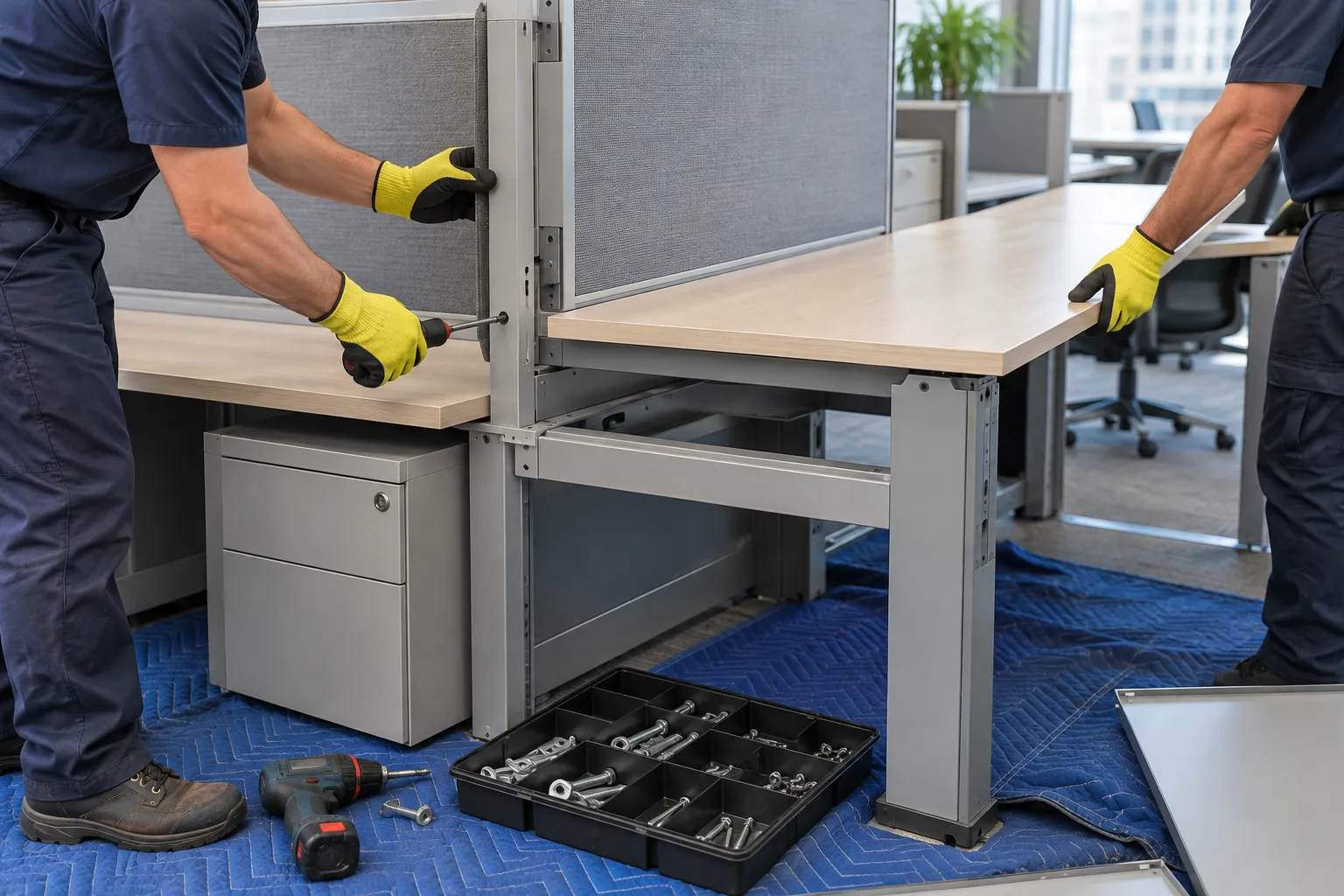
The dimensions and access details that help a furniture-removal quote reflect the real job. Use this guide before you request a quote so the removal provider can understand the material, access, and timing.
Measure the item at its widest points
Record width, depth, and height for desks, tables, cabinets, and modular furniture. Measure with drawers and doors closed. For L-shaped desks, note each section separately and whether the sections disconnect.
Measure every tight point on the route
Check office doors, elevator doors, stair turns, loading doors, and any gate between the item and the truck. The narrowest point usually determines whether disassembly is needed.
Identify weight and handling clues
Solid wood, stone, glass, loaded filing cabinets, and powered furniture need extra planning. Empty drawers and cabinets unless the removal provider gives different instructions. Do not dismantle glass or powered components without the right guidance.
Photograph connections, not just the front
A clear photo of brackets, panel joins, cable trays, and anchor points helps explain the work. Remove business documents, electronics, and personal items before photographing the area.
Share building constraints
Tell the provider about elevator reservations, loading windows, floor protection, parking height, and occupied areas. These details affect crew size, equipment, and timing.
Questions to ask the provider
- Is every material type on the list accepted?
- What access information could change the crew or equipment plan?
- Should anything be boxed, emptied, or disconnected before arrival?
- How will the on-site quote and approval work?
- What happens if the actual load differs from the photos?
Ready to plan the job?
Review the companion service page, then call with your item list and access notes.
Office Furniture Removal