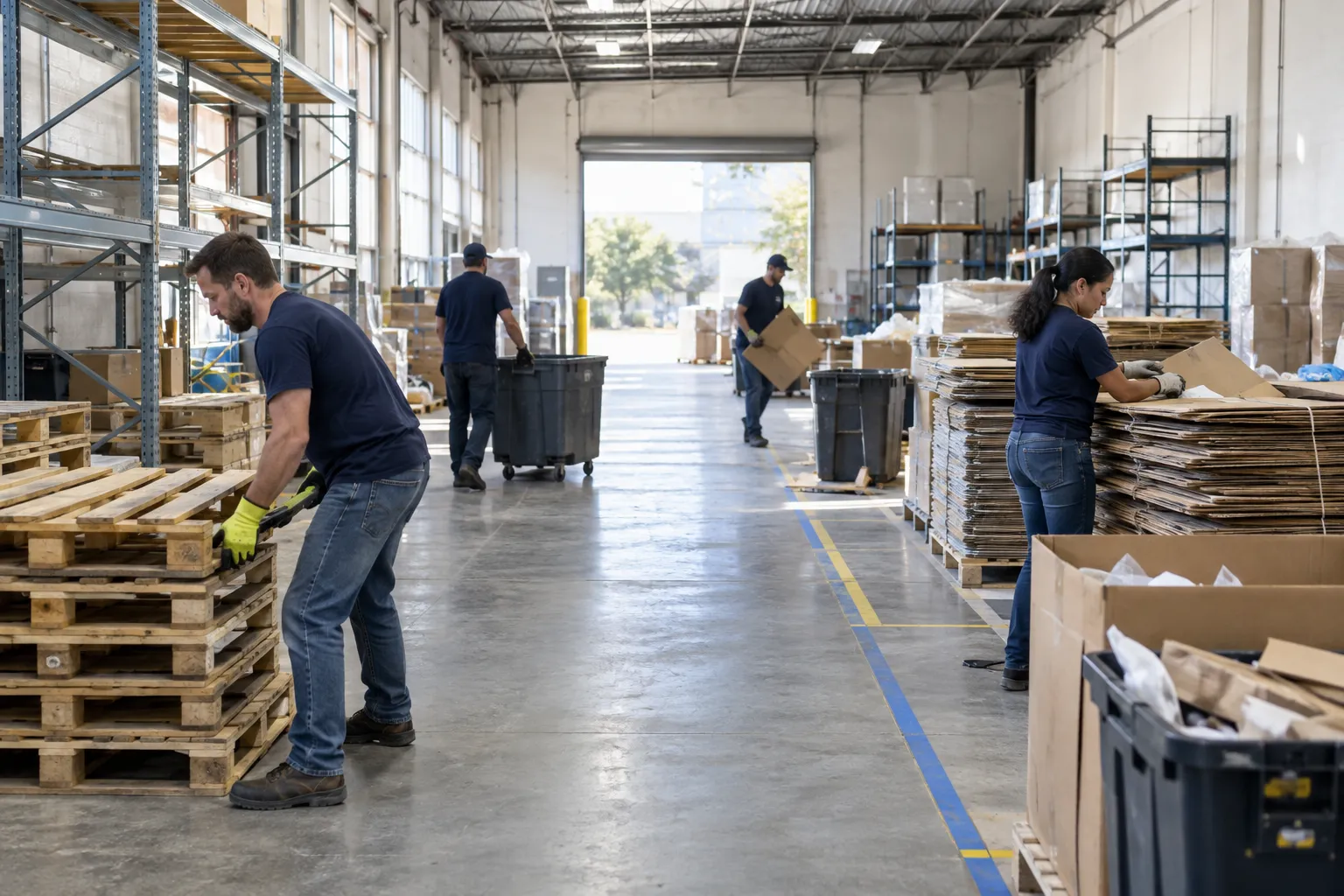
A zone-based inventory plan for separating saleable stock, equipment, recyclables, and approved junk. Use this guide before you request a quote so the removal provider can understand the material, access, and timing.
Divide the building into zones
Use aisle, bay, mezzanine, office, and loading-area labels that your staff already understands. A zone map makes the removal list easier to verify and gives everyone a shared reference.
Separate ownership from condition
First decide whether the business owns an item and may release it. Then record whether it is reusable, recyclable, broken, or requires special handling. Condition alone does not authorize removal.
Count in practical units
Count pallets, rack sections, gaylords, rolling bins, and equipment pieces instead of estimating one undifferentiated pile. Note whether items are loose, boxed, strapped, or bolted down.
Keep regulated material out of the general load
Batteries, chemicals, fuels, pressurized containers, biohazards, and other hazardous material need an approved channel. Junk Dawgs lists hazardous or dangerous items among the materials it does not accept; confirm uncertain items before scheduling.
Stage without blocking operations
Keep exits, fire equipment, docks, and active pick paths open. Use a clearly approved staging area and make sure the on-site contact can identify every item in it.
Questions to ask the provider
- Is every material type on the list accepted?
- What access information could change the crew or equipment plan?
- Should anything be boxed, emptied, or disconnected before arrival?
- How will the on-site quote and approval work?
- What happens if the actual load differs from the photos?
Ready to plan the job?
Review the companion service page, then call with your item list and access notes.
Warehouse Cleanouts